
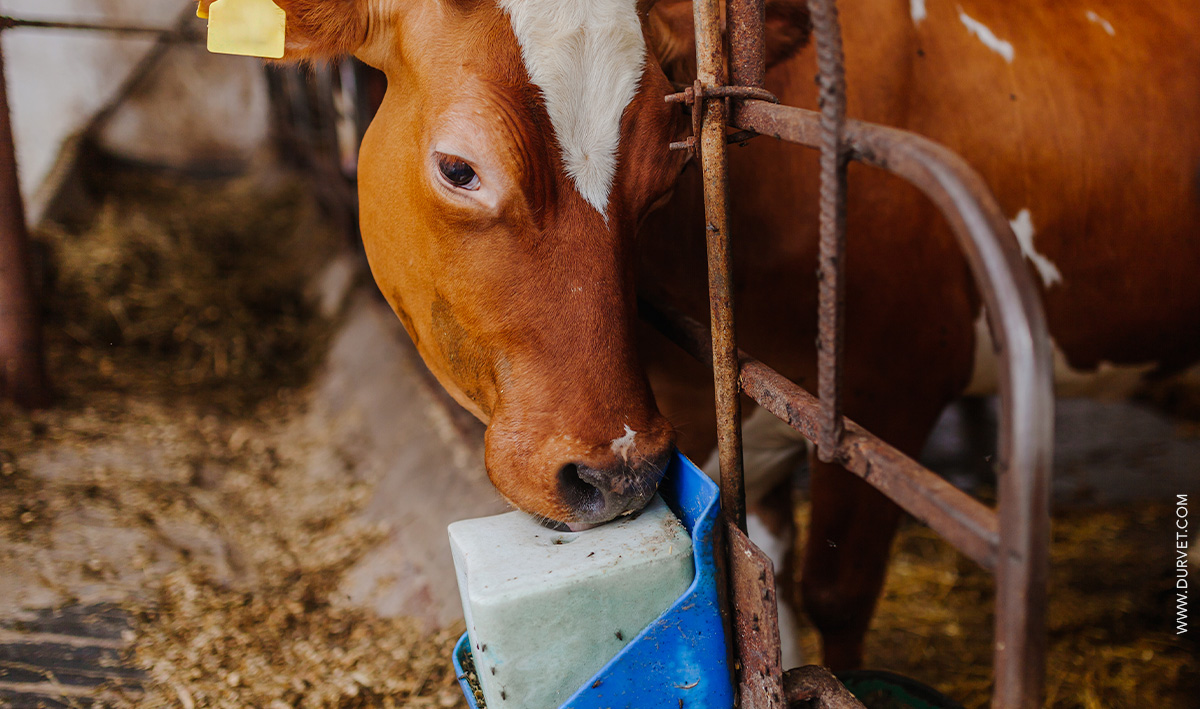
For dealers and independent farm and pet retail store owners, vitamins and minerals have been long-time staples in the animal health category. They appear in feeds, supplements, and specialty products across species. Yet despite their widespread use, there lingers a mystery about what they actually do and why they’re so crucial.
A clear, practical understanding of these tiny yet mighty nutrients can help retailers guide customers more effectively and make informed merchandising decisions.
What Are Vitamins and Minerals?
Vitamins and minerals are essential nutrients required to support day-to-day physiological function. They are often referred to as micronutrients, meaning only small quantities are needed, but their presence is critical to an animal’s health and performance because of the supporting roles they play in a variety of bodily processes.
Unlike carbohydrates, fats, and proteins —also known as macronutrients— which provide energy or serve as structural building blocks, vitamins and minerals do not supply calories. Carbohydrates and fats are primary energy sources, supplying fuel for daily activity and metabolism. Proteins are primarily structure- and function-providing nutrients, supporting tissue growth, repair, and enzyme production.
Micronutrients work in the background, enabling these macronutrients to be properly utilized.
The Role of Vitamins and Minerals
Vitamins and minerals serve as regulators, catalysts, and structural components within the body. Many function as cofactors, helping enzymes carry out chemical reactions. Without adequate levels, essential biological activities slow down or fail altogether.
Their roles extend across nearly every system in the body:
- Supporting metabolic reactions that convert feed into usable energy
- Maintaining proper immune function
- Enabling growth and development
- Regulating reproductive processes
- Supporting nerve signaling and muscle contraction
Because they are involved in so many systems, deficiencies or imbalances can occur in multiple ways, often making them difficult to diagnose without a broader evaluation.

Key Areas of Impact
Growth and Development
Adequate vitamin and mineral intake is essential for proper growth, particularly in young animals. Nutrients such as calcium, phosphorus, and vitamin D are critical for skeletal development, while trace minerals like zinc and copper support tissue formation and enzyme activity.
Immune Function
Micronutrients play a central role in immune defense. Vitamins A and E, along with trace minerals like selenium and zinc, help maintain immune cell function and protect against oxidative stress.
Oxidative stress occurs when the production of free radicals exceeds the body’s antioxidant defenses. This imbalance can damage cells, proteins and DNA, potentially affecting health and recovery.
Reproduction
Reproductive efficiency is closely tied to micronutrient status. For example, deficiencies in vitamin A, selenium, or iodine can negatively affect fertility, conception rates, and offspring viability. In production settings, these impacts can have measurable economic consequences.
Metabolism
Many vitamins—particularly those in the B-complex group—are directly involved in energy metabolism. They help convert carbohydrates, fats,and proteins into energy the animal can use. Without sufficient levels, feed efficiency may decline, negatively impacting overall performance.
Muscle and Nerve Function
Minerals such as calcium, magnesium, potassium, and sodium are essential for proper muscle contraction and nerve transmission.
Imbalances can lead to issues ranging from poor coordination to more severe neuromuscular symptoms.
Bone Development
Calcium and phosphorus are the primary minerals involved in bone formation, but they rely on vitamin D for proper absorption and utilization. An imbalance in this system can lead to weak bones, poor growth, or structural abnormalities.
Skin and Coat Health
Healthy skin and coat condition often reflect an animal’s nutritional status. Biotin, zinc, vitamins A and E, and essential fatty acids all contribute to skin integrity and hair or coat quality. Poor coat condition may signal underlying nutritional gaps or other health concerns.
Overall Performance
Whether in companion animals, livestock, or performance animals, optimal micronutrient status supports stamina, productivity, and general well-being. Subtle deficiencies may not cause obvious illness but can still limit performance potential.
Understanding Vitamin Types
Vitamins are generally grouped into two categories based on how they are absorbed and stored:
Fat-Soluble Vitamins (A, D, E, and K)
These vitamins require dietary fats for proper absorption and storage in body tissues, particularly the liver and fatty tissue. Because the body can build reserves, deficiencies may take longer to develop. On the other hand, excessive intake over time can pose toxicity risks.
- Vitamin A: vision, immune function, reproduction
- Vitamin D: calcium and phosphorus regulation, bone health
- Vitamin E: antioxidant protection
- Vitamin K: blood clotting
Water-Soluble Vitamins (B-complex and Vitamin C)
These vitamins dissolve in water and are not stored in significant amounts in the body. They support a variety of functions, including energy metabolism, antioxidant activity and nervous system function. Excess amounts are generally excreted in urine, so many water-soluble vitamins must be supplied regularly. Requirements vary by species because animals—or, in ruminants, microbes in the digestive tract— can synthesize some of them.
- B vitamins: energy metabolism, nervous system function
- Vitamin C: antioxidant support and immune function (synthesized internally in some species)
Because water-soluble vitamins are excreted more readily, the risk of toxicity is generally lower than with fat-soluble vitamins, though balance remains important, and both requirements and the ability to synthesize certain vitamins vary by species.
Macro vs. Trace Minerals
Minerals are also classified based on the amount required in the diet:
Macrominerals
These are needed in larger amounts, such as a percentage of the animal’s total daily diet or as a specific number of grams per day, and include calcium, phosphorus, magnesium, potassium, sodium, chloride, and sulfur.
Macrominerals are often involved in structural roles, such as bone formation, as well as fluid balance, muscle function and nerve transmission.
Trace Minerals
Also known as microminerals, these are required in much smaller amounts, for instance, parts per million (ppm) or milligrams (mg) per day per animal, but are no less important. Examples include iron, zinc, copper, manganese, iodine, and selenium.
Trace minerals function as enzyme cofactors – or enzyme “helpers” – and are essential for processes such as oxygen transport, immune response, and hormone production.
Common Causes of Deficiency
Micronutrient deficiencies are not always the result of a simple lack of supplementation. In many cases, they stem from a combination of factors:
- Imbalanced diets: Rations that are not properly formulated for the species, life stage, or production level.
- Poor forage quality: Nutrient levels in forage can vary widely based on soil conditions, maturity at harvest, and storage.
- Mineral interactions: Certain minerals can interfere with the absorption or use of others. For example, in some animals, high calcium levels can reduce zinc solubility, impair absorption, and lead to zinc deficiency.
- Water quality issues: High mineral content in water can contribute to imbalances or interfere with nutrient utilization.
- Environmental stress: Heat, cold, transport, and other stressors may affect feed intake, metabolism or nutrient needs.
- Health status: Disease or parasitism can affect nutrient absorption and utilization.
Because these factors often overlap, identifying the root cause requires a broader look at the animal’s overall management and environment.
Identifying the Real Issue
When a potential vitamin or mineral issue is suspected, a systematic approach is more effective than assuming supplementation alone will solve the problem. Several tools and practices can help clarify the situation:
Forage and Feed Analysis
Laboratory testing of forage and feed provides a baseline understanding of nutrient content. This is especially important in livestock systems where forage makes up a significant portion of the diet.
Water Quality Testing
Water is often overlooked as a nutrient source. Testing can reveal high levels of minerals such as iron, sulfur, or salts that may impact overall balance.
Ration Review
Evaluating the complete diet—including concentrates, supplements, and forage—helps determine whether nutrient requirements are being met and whether any imbalances exist.
Animal History and Observation
Age, production stage, health status, and performance trends all provide important context. Observing patterns across a group can help distinguish between individual issues and broader nutritional concerns.
Professional Guidance
Veterinarians and animal nutritionists play a key role in diagnosing and addressing micronutrient issues. Their input can help interpret test results, identify interactions, and recommend appropriate adjustments.
A Balanced Perspective
While vitamin and mineral products are a valuable part of the animal health category, they are most effective when used as part of a comprehensive nutritional strategy. Not every issue stems from a deficiency, and not every concern is resolved through supplementation alone.
For retailers, the opportunity lies in helping customers take a more informed approach—encouraging them to consider the full picture, from feed quality to management practices. By understanding the foundational role of vitamins and minerals, retailers can better support their customers in making decisions that promote long-term animal health and performance.
Knowledge Builds Trust
Vitamins and minerals may be required in relatively small amounts, but their impact on animal health is significant. From supporting growth and immunity to enabling metabolic function and reproduction, these micronutrients are essential to nearly every aspect of physiology.
A practical understanding of how they work—and how deficiencies arise—allows retailers to move beyond product selection alone and toward more meaningful, solution-oriented conversations with their customers. In doing so, they reinforce their role as trusted partners in animal health, grounded as much in knowledge as in inventory.
Sources:
Merck Veterinary Manual, Nutrient Requirements of Beef Cattle
Merck Veterinary Manual, Nutritional Requirements of Small Animals
Merck Veterinary Manual, Nutritional Requirements of Goats
University of Minnesota Extension, Providing Your Horse Vitamins and Minerals
Penn State Extension, Why Testing Matters: Improving Mineral Nutrition in Sheep Flocks
 BACK TO MAIN BLOG
Comment