
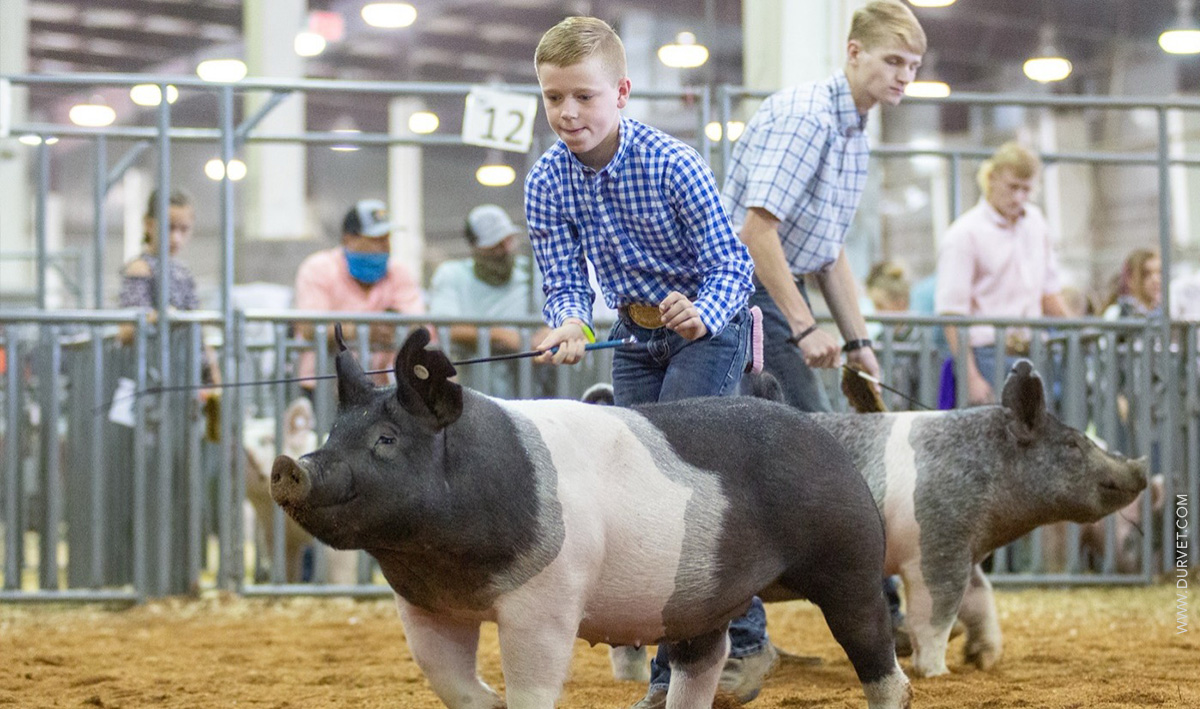
It’s county fair season in the Midwest. Carnival rides, the aroma of funnel cakes, and livestock shows are all staples at many fairs. Pig shows, for the uninitiated, might look and sounds like a chaotic barnyard scene, but when done well can be an example of a youth’s discipline, dedication, and genuine affection between a showman and pig.
Young 4-H and FFA members, many no older than 8, showcase their hard work and time spent in a barn with their animals to a judge and spectators alike. While most other species of animals (horses, cattle, dogs) would have a halter or leash, a pig’s head isn’t shaped to accommodate a halter. The pigs are handled with gentle taps of a whip on the shoulder and neck to guide the animals across the wood shavings of the show ring. Each pig being driven with precision to show off their structure, muscle and overall build.
Show pigs are presented in a very specific and intentional way to highlight their best qualities and allow judges to evaluate them fairly and accurately. The way pigs are shown combines animal handling, control, and cleanliness. The pig is “driven” by the exhibitor at a steady pace and will attempt to give the judge the best views of their animal while maintaining a proper distance away from other pigs so as to not be overlooked.
Most show rings are designed to allow a judge to view each animal upon entry into the ring. One by one the polished pigs enter the big stage with each under the watchful eye of the trained official. First impressions are also important in the show ring. While it may appear that the pigs are aimlessly roaming, the showmen are directing each pig to an opening in the chaos. Some fairground setups have additional individual pens that the judge can use to stall a pig to help narrow down his final selections. Upon the judge’s completion of the class, he will discuss his favorites from best to worst, or worst to best.
Judges for swine shows are typically selected based on their expertise, experience, training, and reputation in the livestock industry. The individuals are often experienced livestock evaluators or breeders. Many have the same background in 4-H or FFA as the youth sharing the ring with them. These evaluators must be knowledgeable about different pig breeds, showmanship standards, and market vs. breeding qualities of swine.
Participating in a livestock project through programs like 4-H and FFA offers tremendous value – personally, academically, and professionally. These projects are more than just raising an animal: they are hands-on education in responsibility, leadership, and life skills that last well beyond the county fair experience. Many of these youth may pursue a career in animal agriculture.
While the banner, trophies, and belt buckles won may tarnish and fade over time, the lessons, friends, and memories made at the county fair will not be forgotten.
Disclaimer: This photo was provided by the parent/guardian of the child depicted and is used with their permission. The original photographer is unknown, and all copyrights remain with the original copyright holder. If you are the copyright owner and wish to request credit or removal, please contact us.

 BACK TO MAIN BLOG
Comment