
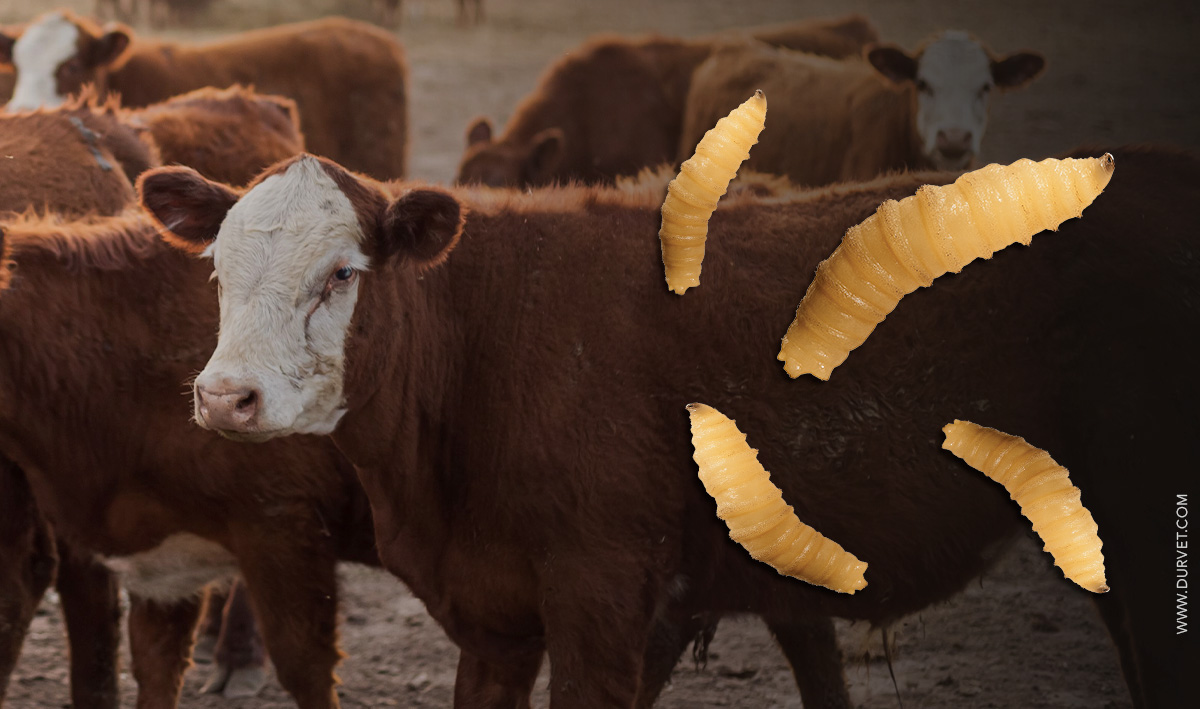
While most in the animal health industry are familiar with parasites that affect livestock and pets, the New World Screwworm (NWS) is a name many hoped would stay in the past. Once eradicated from the United States, this dangerous pest has reemerged and has prompted renewed vigilance among many animal health officials and veterinarians with the potential re-infestation of the NWS into the United States. If this pest continues migrating north from Central America and Mexico into the Southern U.S., it could seriously threaten the beef industry and wildlife—something not seen in over 50 years. The NWS is a species of blowfly native to tropical and subtropical regions of the Americas. Unlike other flies, female NWS lay their eggs in open wounds, mucous membranes, or exposed tissue of warm-blooded animals. After hatching, the larvae burrow into the living flesh, feeding on it and causing severe tissue damage. Most maggots from other fly species feed on dead tissue, but NWS larvae consume live tissue, making them especially dangerous. Left untreated, these infestations can become life-threatening within 7-14 days.
Life Cycle
The NWS has a short and aggressive life cycle, allowing rapid population growth. Females lay over 200 eggs in a shingle-like pattern near wounds or mucous membranes. These eggs hatch within 10–12 hours, and larvae begin feeding in a “head-down” position, burrowing deeper as they go. After 5–7 days, they drop to the ground to pupate. In warm climates, adult flies can emerge in about a week, ready to continue the life cycle.
Eradication and Ongoing Risk
Once common across the Southern U.S., Mexico, and Central and South America, the NWS was declared eradicated in the U.S. in 1966, thanks to the development of the Sterile Insect Technique (SIT). Scientists discovered that female NWS flies mate only once. By releasing millions of sterile males into the wild, the population dropped significantly as females mated with sterile males and produced no offspring. While some populations remained in southern states until about 1982, SIT was key to the successful eradication.
Current Prevention and Surveillance
As NWS populations move north through Mexico, early detection in the U.S. is crucial. Border inspection stations, animal quarantine centers, and veterinary surveillance programs are in place to identify and contain new infestations quickly. New SIT facilities are also being developed to produce sterile males if needed again.
What Store Owners, Producers and Pet Owners Can Do
Understanding the risks and current developments surrounding the NWS is essential for staying informed and prepared. Vigilance and being aware of the signs of NWS plays a critical role—female flies are drawn to any wounds on animals, including branding marks, ear tag sites, tick bites, and even the navels of newborn calves. Store owners and animal caretakers should be aware of these risk factors and watch closely for any early signs of infestation:
• Swelling around a wound
• Foul odor or discharge
• Maggots embedded in tissue, head down
• Signs of pain or agitation
What to Do If You Suspect NWS
NWS is classified as a reportable Foreign Animal Disease. If you suspect it in your animals, contact your veterinarian immediately. They will alert the USDA Animal and Plant Health Inspection Service (APHIS), which will coordinate treatment. The basic protocol includes:
1. Suspect – The owner/producer observes signs
2. Diagnose – Veterinarian confirms/ collects maggots for identification
3. Treat – Veterinary-approved methods are used
4. Report – USDA-APHIS is notified
On-Farm Protocol
Strong fly control practices are always important. Also, keep permethrin-based fly sprays on hand; they can help treat suspected cases quickly. While few products are labeled specifically for NWS, veterinarians can advise on appropriate treatments. Additional guidance, reporting instructions, and treatment protocols can be found on the USDA APHIS website: www.aphis.usda.gov.
Your Role in Prevention and Awareness
By staying informed, stocking effective fly control solutions, and encouraging customers to act quickly on wounds and unusual behavior, you help create a stronger line of defense against threats like New World Screwworm. Being proactive not only protects the animals in your region – it strengthens the broader agricultural and animal health community we all serve.
Originally featured in ProfitBuilder | 2025 Issue 1

 BACK TO MAIN BLOG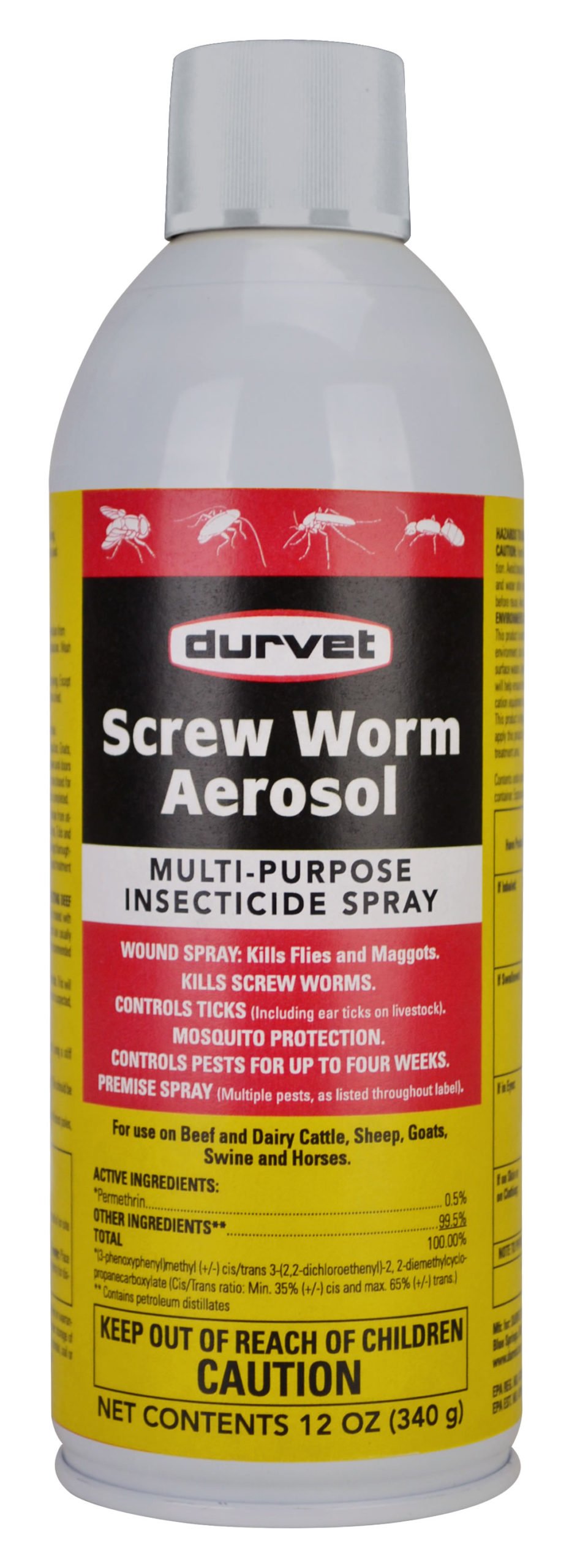
Comment