
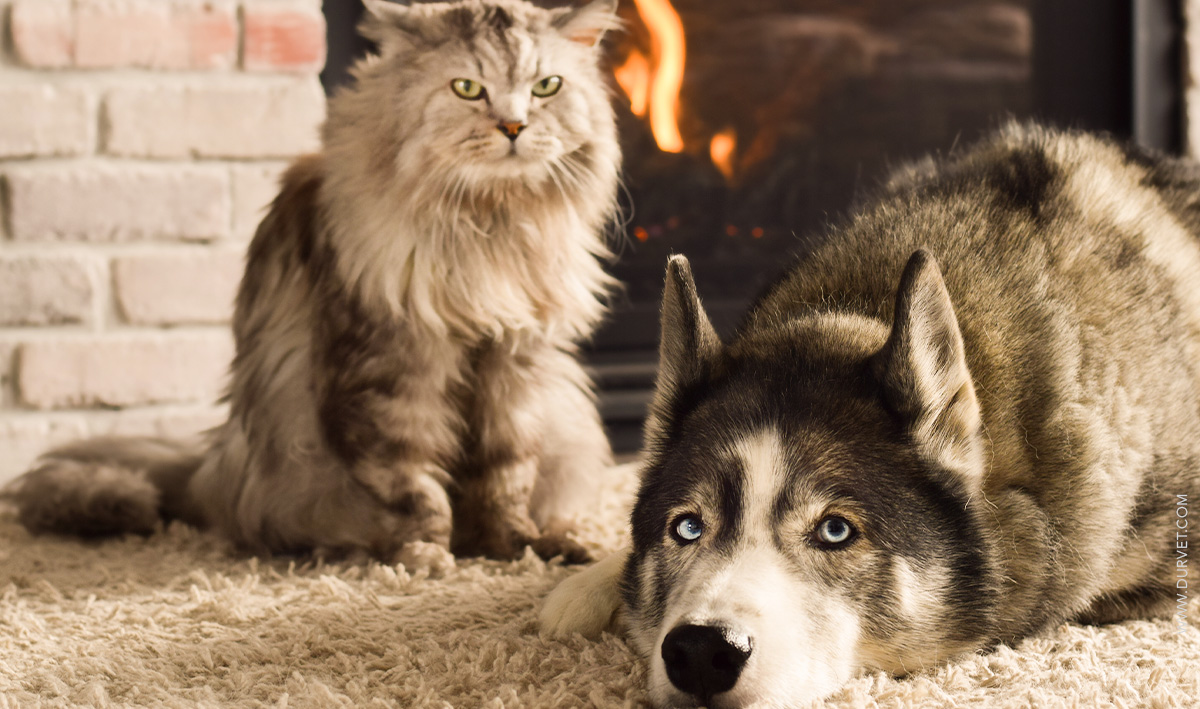
I just love this time of year — when the days grow shorter, the leaves begin to fall, and the excitement of the holidays fills the air. Meals are lovingly prepared, decorations carefully arranged, and gifts are wrapped in beautiful paper and ribbon. It’s a truly magical season, as families gather around the hearth and table to celebrate life’s many blessings.
Well… most people love this time of year — except, perhaps, emergency veterinarians.
With the holidays come all sorts of potential hazards and toxins that can affect our pets. So, before the festivities begin, let’s review some of the most common seasonal dangers — and hopefully avoid any unexpected Christmas Eve visits to your local veterinary urgent care clinic.
There are three main categories of holiday hazards to keep in mind: foods and drinks, plants and flowers, and decorations.
Foods & Drinks
- Chocolate Chocolate contains two chemicals — theobromine and caffeine — that are toxic to dogs and cats. The darker the chocolate, the higher the theobromine content and the more dangerous it becomes. Signs of chocolate poisoning usually appear within 6–12 hours of ingestion and can include increased thirst, vomiting, diarrhea, abdominal bloating, and restlessness. These may progress to hyperactivity, loss of coordination, tremors, seizures, and in severe cases, life-threatening heart arrhythmias. If you suspect your dog has eaten chocolate, call your veterinarian immediately. They’ll ask about your dog’s weight, the type of chocolate (dark, milk, or white), and how much was eaten to determine the next steps.
- Grapes & Raisins Found in fruitcakes, breads, cookies, and trail mixes, grapes and raisins have been linked to acute kidney failure in dogs. The suspected culprit is tartaric acid, an organic acid naturally found in high concentrations in these fruits. Not all dogs are equally sensitive, but because it’s impossible to know which are, no dog (or cat) should ever eat grapes or raisins. If ingestion occurs, signs of illness — such as vomiting, lethargy, or loss of appetite — may appear within 72 hours. Contact your veterinarian right away if you suspect your pet has eaten any amount.
- Fatty Drippings & Gravy While some fats are beneficial, too much rich, greasy food (like meat drippings or gravy) can lead to acute pancreatitis, a painful inflammation of the pancreas. Symptoms include vomiting, abdominal pain, and loss of appetite. To keep everyone healthy — and your holiday peaceful — it’s best to skip sharing leftovers with your pets.
- Unbaked Bread Dough If your pet eats raw yeast dough, it can expand inside the stomach, causing painful bloating. The fermenting yeast also produces ethanol, leading to intoxication. If your pet has ingested raw dough, contact your veterinarian immediately, as this can quickly become an emergency.
Plants & Flowers
Poinsettias and Holly can cause mild to moderate irritation of the mouth and stomach, resulting in drooling or vomiting. Lilies, on the other hand, are extremely toxic to cats. Even a small exposure — chewing on a leaf or stem, ingesting the pollen, or drinking water from a lily vase — can cause sudden, life-threatening kidney failure. If you have cats, it’s safest to avoid lilies altogether.
Decorations
- Tinsel & Ribbon Cats often love to play with shiny strings and ribbons but, if swallowed, these can cause a dangerous “linear foreign body” in the intestines. As the intestines move and contract, they can bunch up (“accordion”) around the string, leading to severe intestinal damage. If your cat may have swallowed tinsel or ribbon, call your veterinarian immediately. This is a surgical emergency.
- Electrical Cords & Lights It’s not just a scene from a holiday movie — every year, pets suffer burns or electrocution after chewing on light cords or power cables. Whenever possible, keep cords hidden or out of reach, and use protective covers to keep curious pets safe.
Keeping the Holidays Happy
The holiday season can be one of the most wonderful times of the year — but it can also be stressful for pets, with schedule changes, guests, and tempting new sights and smells. To keep the season merry and bright, stay mindful of these hazards and take simple precautions to prevent accidents. A little preparation goes a long way toward ensuring everyone — two- and four-legged alike — enjoys a joyful and safe holiday season.

 BACK TO MAIN BLOG

Comment