
When cattle head into fall, producers are already thinking ahead: winter feed, body condition, calving and the next production season. One important piece of that preparation shouldn’t be overlooked - parasite control.
According to Grant Weaver, DVM, Livestock Technical Services Veterinarian at Aurora Pharmaceutical, fall is one of the most important times of year to evaluate a herd’s deworming program. Managing parasite burdens now can help cattle make better use of available nutrition, maintain condition and enter winter better prepared for the months ahead.
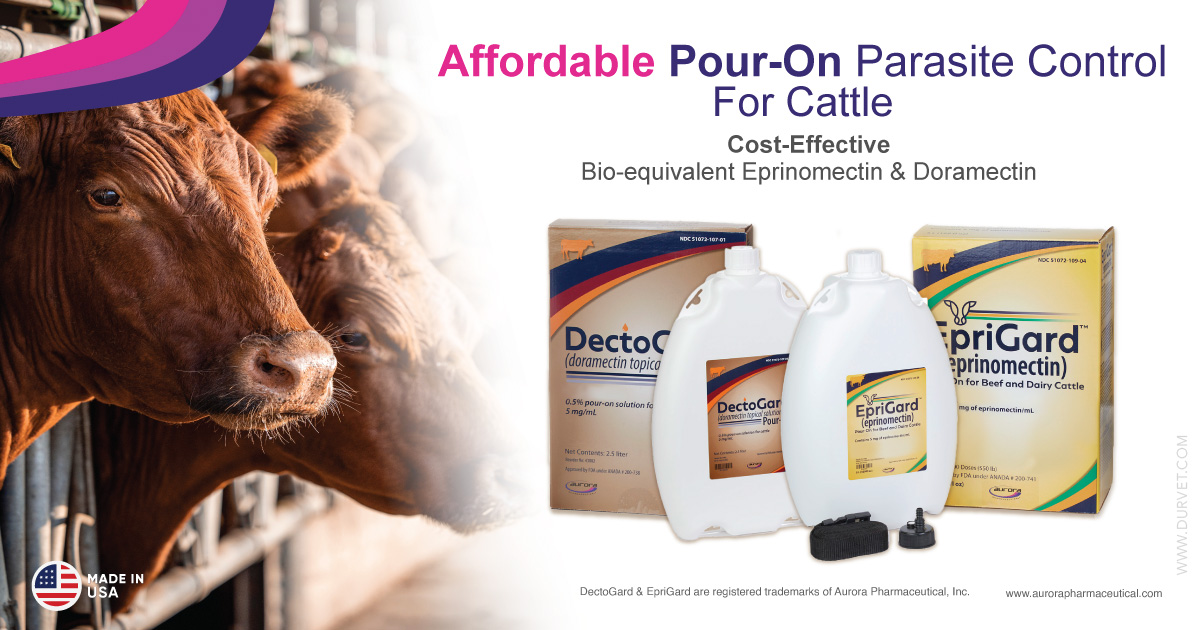
And with products like EpriGard® (eprinomectin) Pour-On and DectoGard® (doramectin topical solution) Pour-On, producers have practical options from Aurora Pharmaceutical to incorporate into their parasite control program.
Parasites Can Take More than You See
The effects of gastrointestinal (GI) parasites aren’t always obvious from looking at an animal.
Parasites can interfere with digestion and damage the GI tract, reducing an animal’s ability to absorb and utilize nutrients. That means cattle may not be getting the full benefit of the hay, forage and feed already being provided.
For producers, that matters. Feed is one of the largest investments in maintaining a productive herd, and anything that prevents cattle from efficiently utilizing those nutrients can work against both animal performance and the operation’s bottom line.
Effective parasite management helps protect that investment.
Why Fall Matters
Parasite control is important throughout the production cycle, but fall presents a particularly important opportunity.
Dr. Weaver notes that adult worm populations tend to be at their highest during the fall. At the same time, cattle may be adapting to changing weather, nutritional changes, gestation and other seasonal stressors.
Together, these stress factors can put additional pressure on cattle at a time when maintaining body condition and overall health is especially important.
Reducing parasite burden before winter can help set cattle up to better utilize available nutrition and maintain the condition they’ll need heading into the next production season.
Lower Egg Counts Don't Always Mean Lower Risk
Fecal egg counts can be a useful tool when evaluating a parasite control program, but producers shouldn’t assume that a lower fall egg count means parasites are no longer a concern.
While egg counts may decline, later-stage worms and parasites may still be present within the animal. That hidden parasite burden can continue affecting nutrient utilization and overall health, even when the signs aren’t immediately visible.
That’s why working with a veterinarian is so important. Parasite control shouldn’t be based on a single number or a one-size-fits-all schedule. Your veterinarian can help evaluate your herd, environment and management practices to develop a program appropriate for your operation.
Think beyond Calves
Young cattle often receive the most attention when it comes to deworming—and for good reason. Calves and yearlings can be especially vulnerable because their immune systems have not had the same opportunity to develop resistance to parasite challenges.
But parasite management shouldn’t stop there.
Dr. Weaver recommends considering all classes of cattle when developing a fall deworming strategy. A whole-herd approach can help address parasite burdens throughout the operation and support the long-term health and productivity of the herd.
Invest in Spring This Fall
A fall deworming program isn’t only about what happens today. It can be an important step in preparing cattle for winter, calving and the next breeding season.
By reducing parasite burden and supporting better nutrient utilization, producers can help position their cattle for:
- Better body condition heading into calving
- Better utilization of valuable feed and forage
- Improved reproductive performance
- Stronger, healthier calves
- Greater overall herd productivity
Practical Parasite Control from Aurora Pharmaceutical
An effective herd health program also must make economic sense.
Aurora Pharmaceutical offers cattle producers two pour-on deworming options, EpriGard® (eprinomectin) Pour-On and DectoGard® (doramectin topical solution) Pour-On.
Both cost-conscious options give producers access to trusted active ingredients designed with real-world livestock operations in mind. When treating multiple animals, or an entire herd, the cost per treatment can add up quickly. Choosing an economical option can help producers manage herd health expenses while continuing to prioritize effective parasite control.
That value becomes even more important when considering the investment already made in cattle, feed and forage. Parasite control isn't simply another input; it can help protect the value of the inputs producers are already providing.
Set Your Herd Up for What's Next
Fall is an opportunity to address parasite pressure before cattle face the challenges of winter and the next production season.
As Dr. Weaver emphasizes, a proactive parasite control program can support nutrient utilization, body condition and overall herd productivity. When working with your veterinarian to develop a deworming strategy based on your herd’s specific needs, consider EpriGard® and DectoGard® from Aurora Pharmaceutical as part of your fall parasite control program - because stronger herds in the spring start with the decisions you make this fall.
IMPORTANT SAFETY INFORMATION
EpriGard® (eprinomectin) Pour-On
Warning: When used according to label directions, neither a pre-slaughter drug withdrawal period nor a milk discard time is required, therefore, meat and milk from cattle treated with EpriGard® (eprinomectin) Pour-On may be used for human consumption at any time following treatment. A withdrawal period has not been established for pre-ruminating calves. Do not use in calves to be processed for veal.
EpriGard Pour-On is for topical application only. Do not administer orally or by injection. Do not apply to areas of the backline covered with mud or manure. This product is not recommended for use in species other than cattle. Severe adverse reactions may result in other species treated with products containing compounds of this class.
Keep this and all drugs out of the reach of children. NOT FOR USE IN HUMANS. Skin contact should be avoided. If accidental skin contact occurs, wash immediately with soap and water. If accidental eye exposure occurs, flush eyes immediately with water.
For complete safety information, refer to the package insert.
DectoGard® (doramectin topical solution) Pour-On
Cattle must not be slaughtered for human consumption within 45 days of treatment. Not for use in female dairy cattle 20 months of age or older. A withdrawal period has not been established for this product in preruminating calves. Do not use in calves to be processed for veal.
DectoGard™ (doramectin topical solution) has been developed specifically for cattle. Use in other animals may result in severe adverse reactions including fatalities in dogs. This product is to be applied to cattle skin surface only. Do not administer orally or parenterally. Do not apply to areas of skin which are caked with mud or manure.
DectoGard™ Pour-On may be irritating to human skin and eyes, and users should be careful not to apply it to themselves or to other persons. Operators should wear protective clothing including a long-sleeved shirt, protective gloves, and boots with a waterproof coat when applying the product. Protective clothing should be washed after use. If accidental skin contact occurs, wash the affected area immediately with soap and water. If accidental eye exposure occurs, flush the eyes immediately with water and get medical attention. Wash hands after use. Do not smoke or eat while handling the product.
Warning: Flammable! Keep away from heat, sparks, open flame, and other sources of ignition.
For complete safety information, refer to the package insert.

 BACK TO MAIN BLOG
Comment