
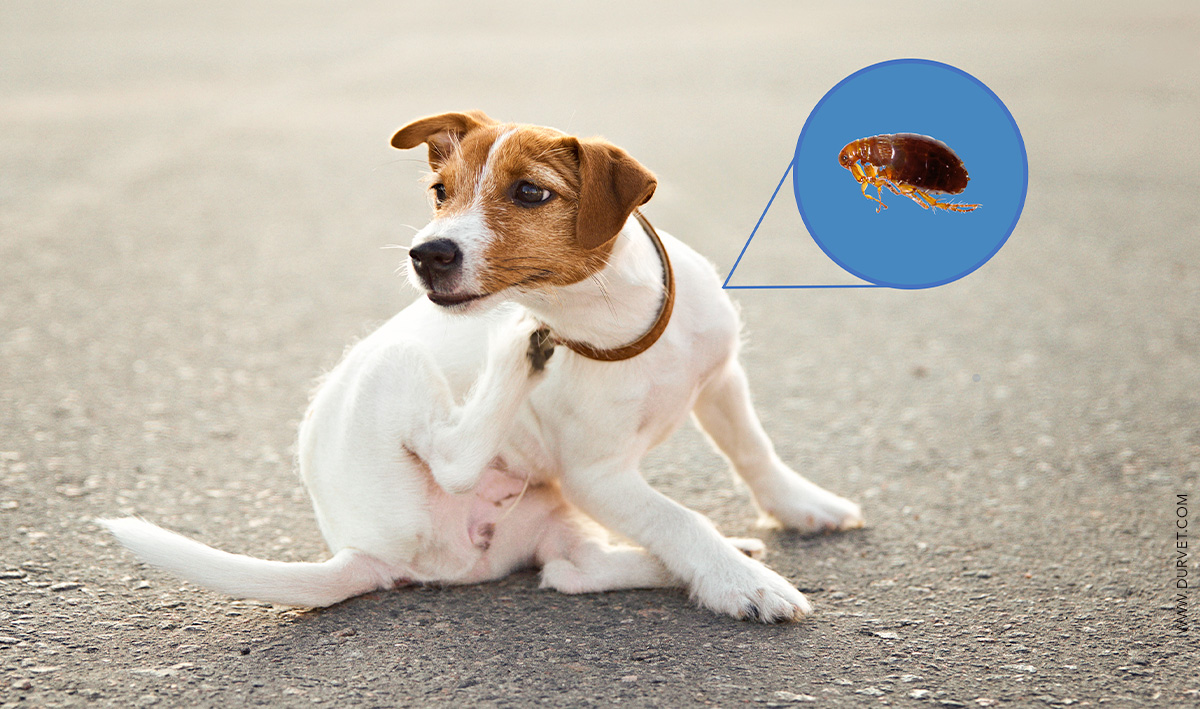
During my years as a practicing veterinarian, I have seen these tiny parasites cause countless headaches for pet owners and significant health problems for their pets. Unfortunately, this is nothing new. Fleas have been around for thousands of years, causing everything from itchy skin and allergic reactions to helping spread one of history's most devastating diseases, the plague, across much of the world during the 1300s.
Fortunately, modern medicine has given us antibiotics to treat the bacteria responsible for plague. What we have not completely conquered, however, is the flea itself.
The good news is that our understanding of fleas has improved dramatically over the past several decades. Before the 1980s, the flea life cycle was not fully understood. Research has since provided valuable insight into flea biology and led to the development of highly effective products for controlling flea infestations.
The Flea Life Cycle
The cat flea (Ctenocephalides felis) is the species most commonly encountered in veterinary medicine. Despite its name, it is frequently found on dogs, cats, and even wildlife. This tiny, wingless, reddish-brown insect survives by feeding on blood. Its flattened body allows it to move easily through fur, while its powerful hind legs enable it to jump great distances in search of a host.
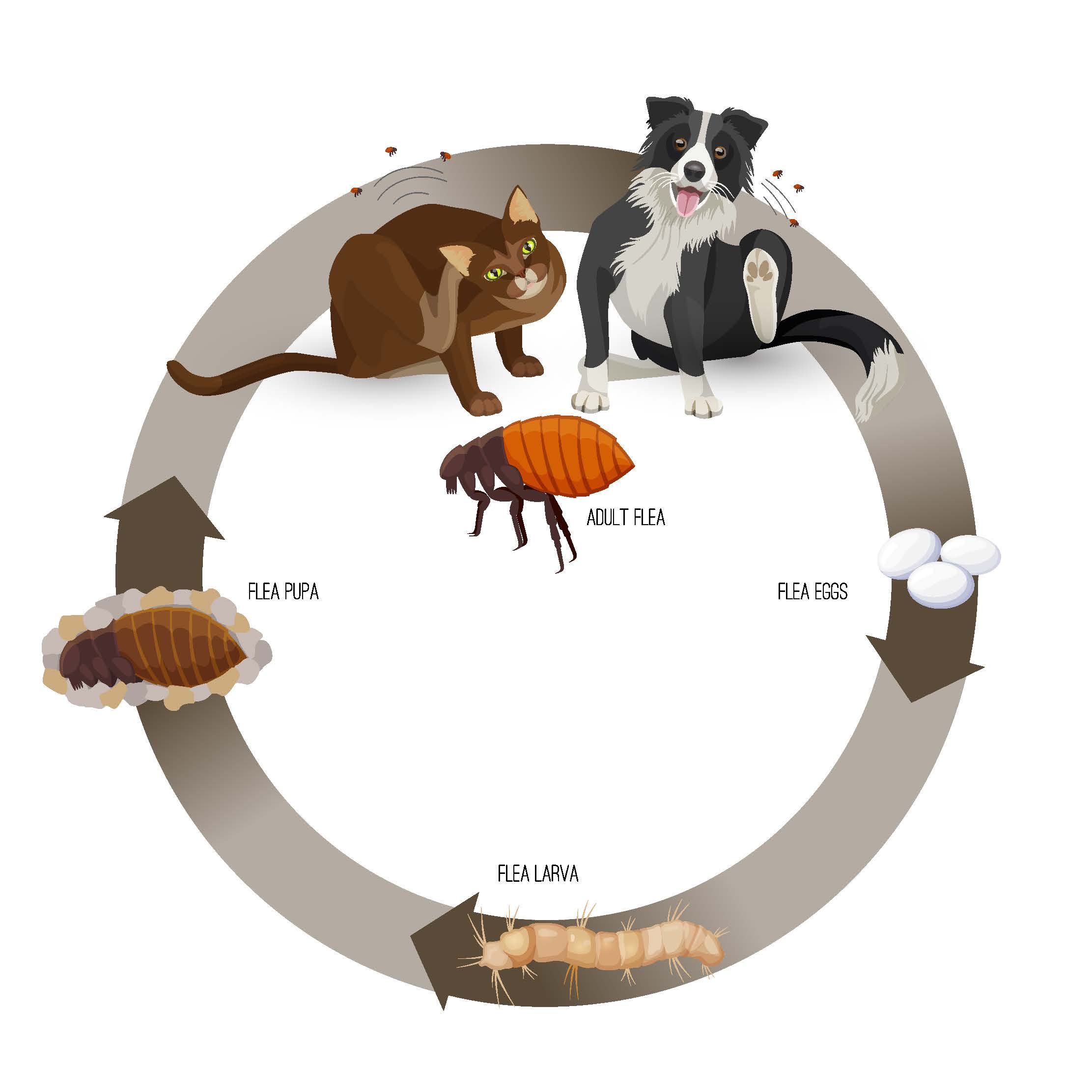
Fleas progress through four life stages:
- Egg
- Larva
- Pupa
- Adult
The Adult Flea
When an adult flea finds a host, it begins feeding within minutes to hours. Contrary to what was once believed, adult fleas rarely leave the host after they have settled in and started feeding.
After taking a blood meal, a female flea can begin producing eggs within one to three days. She deposits these eggs in the animal's hair coat, and a single female can lay up to 50 eggs each day.
These eggs readily fall from the pet into carpeting, bedding, furniture, floor cracks, and other areas where the animal spends time. I often tell clients to think of an infested pet as a saltshaker, sprinkling flea eggs throughout the environment wherever it goes.
The Larval Stage
Within one to ten days, flea eggs hatch into tiny white larvae. These worm-like larvae remain in the environment and feed on organic debris.
One of their primary food sources is "flea dirt" left behind by adult fleas. Flea dirt is flea feces composed primarily of digested blood. While unpleasant to think about, it provides ideal nutrition for developing larvae.
Over approximately two weeks, larvae feed, grow, and molt twice before entering the next stage of development.
The Pupal Stage
As larvae mature, they spin protective cocoons and enter the pupal stage. These cocoons may be found in carpeting, upholstery, bedding, or protected outdoor areas.
Inside the cocoon, the developing flea is highly resistant to environmental conditions and many flea-control measures. Vacuuming, sprays, and other treatments have limited effectiveness against fleas protected within these cocoons.
Under favorable conditions, an adult flea may emerge within five to nine days. However, if conditions are not ideal, the flea can remain dormant inside the cocoon for several months.
Back to the Adult Stage
Adult fleas emerge when they detect signs that a host is nearby. Vibrations from footsteps, increased light, body heat, and carbon dioxide all signal that a potential meal may be close.
Once they emerge, fleas quickly seek a host and begin feeding.
This explains why dogs and cats often acquire fleas not through direct contact with another infested animal, but by entering an environment where newly emerged adult fleas are waiting.
Why Flea Infestations Grow So Quickly
One of the most surprising facts about flea infestations is that only about 5% of the flea population in a typical home exists as adult fleas on the pet. The remaining 95% consists of eggs, larvae, and pupae hidden throughout the environment.
Now consider that a single female flea can lay up to 50 eggs every day. Multiply that by the number of fleas living on a pet, and it becomes easy to understand how a minor flea problem can rapidly become a major infestation.
Breaking the Flea Life Cycle
Because most of the flea population exists in the environment, successful flea control must target both the fleas on your pet and the immature stages developing in your home and yard.
- Use Monthly Flea Prevention on Every Pet
The single most important step in flea control is ensuring that every dog and cat in the household receives a quality flea preventative every month, year-round. These products include topical “spot-ons,” collars, and oral monthly preventatives.
Many products not only kill adult fleas but also contain an Insect Growth Regulator (IGR) that prevents immature stages from developing into reproducing adults.
Treating every pet in the home is critical. As newly emerged fleas find and feed on treated animals, they are killed before they can reproduce. Over time, fewer fleas reach adulthood, fewer eggs are produced, and the overall flea population declines.
In homes with established infestations and a high number of eggs, larvae, and pupae already in the environment, it may take several months of consistent prevention before flea numbers decrease significantly.
- Reduce Fleas in the Home
Environmental control plays an important supporting role in managing flea infestations.
Frequent vacuuming helps remove flea eggs, larvae, and debris that support their development. Pay attention not only to carpets but also to hardwood floors, linoleum, furniture, cracks between floorboards, and areas along baseboards where flea life stages may accumulate.
Regularly washing pet bedding and other fabrics where your pet spends time can further reduce developing flea populations.
- Consider Environmental Treatments
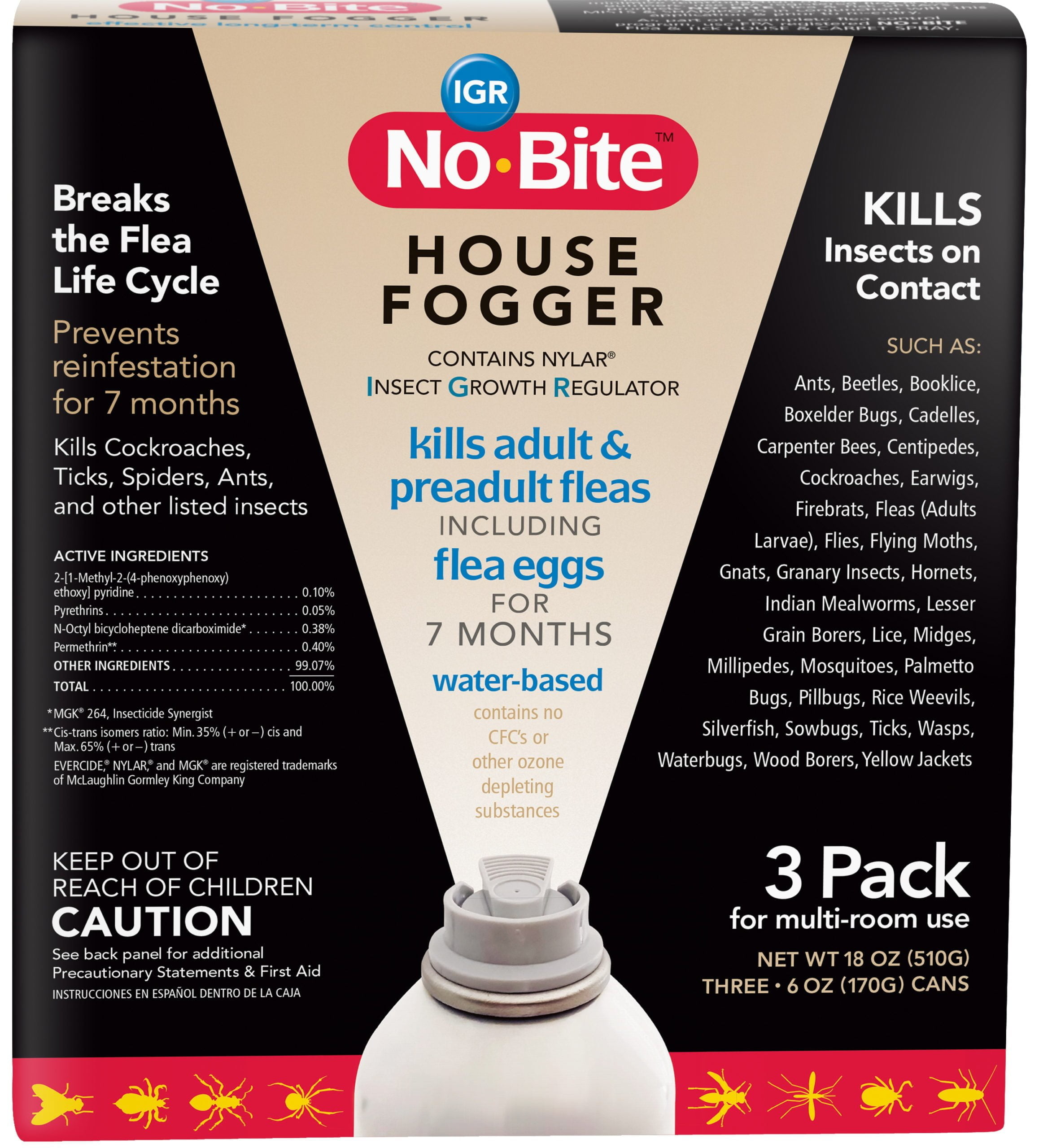
In-home flea sprays or foggers can help reduce populations of adult fleas, eggs, and larvae. However, no currently available product eliminates fleas protected within the pupal cocoon stage.
- Manage the Outdoor Environment
Flea control does not stop at your front door. Fleas thrive in moist, shaded outdoor areas where pets and wildlife frequently rest.
Keeping lawns mowed, removing leaf litter, and clearing brush piles can make your yard less hospitable to fleas. In some situations, premise treatments may also help reduce outdoor flea populations.
Final Thoughts
Fleas are more than just an annoyance—they are highly efficient parasites with a life cycle designed to persist in our homes and on our pets. Successful control requires a comprehensive approach that combines consistent year-round flea prevention for every pet with good environmental management. Eliminating an established flea infestation can take time and patience. It is possible, and depending on trusted reliable products for all life stages will help you confidently move forward towards a flea-free home.

 BACK TO MAIN BLOG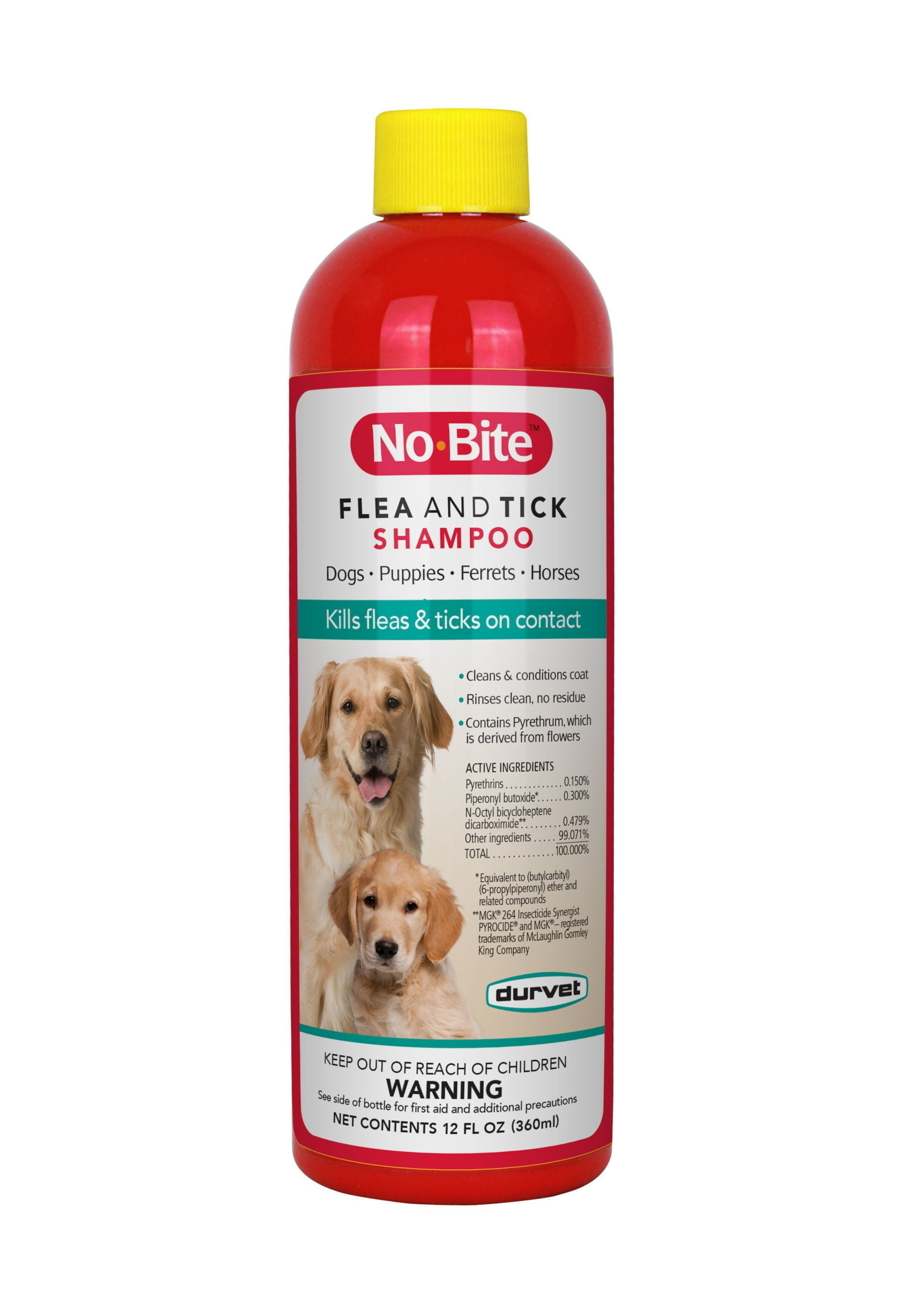

Comment