
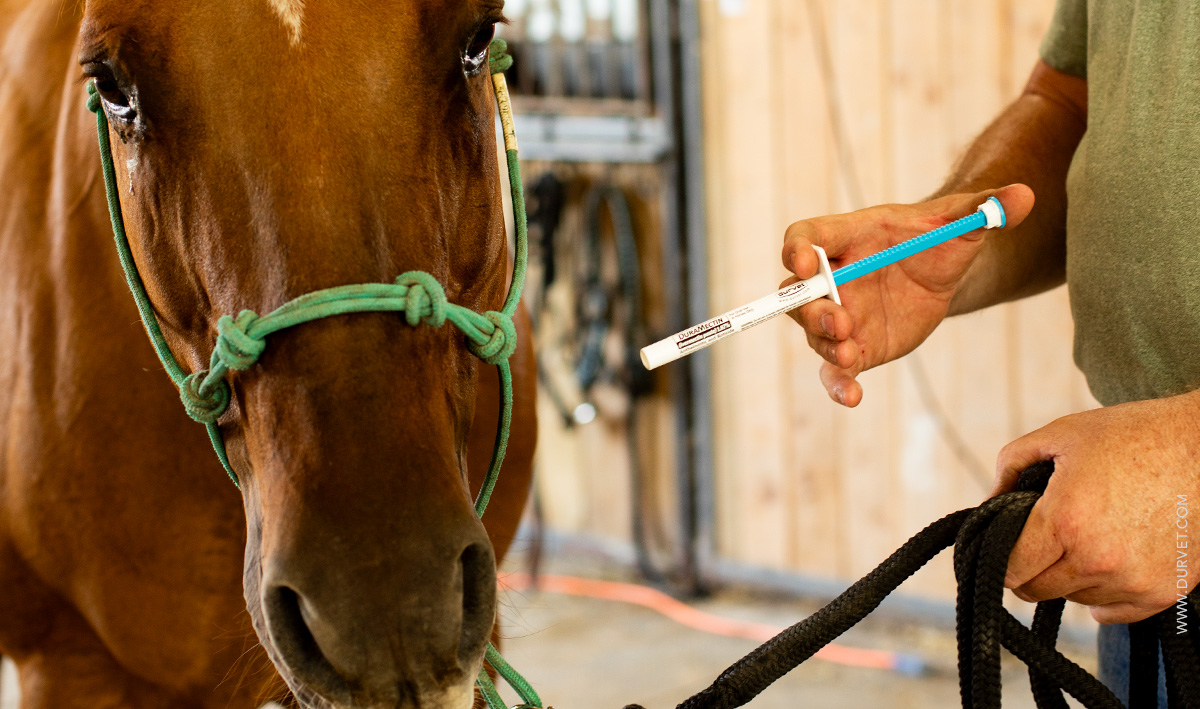
As the saying goes, the only constant in life is change. I think about this when I look back at the deworming recommendations we were making 20 years ago when I graduated from veterinary school. I sometimes cringe when I think about what was once considered “standard of care” for controlling internal parasites in our horses and other livestock.
Some of the first trusted deworming medications were developed in the 1960s, and ivermectin has only been on the scene since the early 1980s. In those days, we believed the goal was to completely eliminate internal parasites through frequent deworming, with much less consideration given to the important role an animal’s immune system plays in controlling parasites. Frequent use of anthelmintics also contributed to the development of anthelmintic resistance in parasite populations around the world. At the same time, less emphasis was placed on management practices that could reduce the overall parasite burden placed on our animals.
Thankfully, we now have more than 50 years of experience and research to draw from. Our understanding of parasites, immunity, and anthelmintic resistance has improved considerably, and better deworming strategies have been developed to benefit the animals entrusted to our care.
I wish there were one slam-dunk, “works for all herds and species” deworming protocol, but that simply isn't the case. With differences in herd management, geographic regions, parasite populations, and species, there is no single protocol that fits every situation. In this article, I’ll touch on some of the basics of deworming strategies for our equine companions, keeping in mind that every barn is unique.
The Goal Has Changed
As mentioned, the goal once was to rid our animals of all worms. We now understand that completely eliminating every internal parasite is neither realistic nor necessary. Instead, we can “work smarter, not harder” when it comes to maximizing the health and well-being of our horses and livestock.
Healthy animals with healthy immune systems can often keep parasite populations under control and require fewer deworming treatments than we previously realized.
Horses and GI Parasites
Horses are susceptible to different gastrointestinal parasites at different stages of their lives. In 2024, the American Association of Equine Practitioners (AAEP) updated its recommendations for internal parasite control in horses of all life stages.
The goal is no longer to deworm every horse according to the calendar. Instead, deworming strategies are based on the individual horse's age, parasite risk, fecal egg count, and likelihood of shedding large numbers of parasite eggs.
Foals are particularly susceptible to certain parasites, while mature horses can often be divided into lower and higher egg shedders. A simple fecal egg count (FEC), performed on a stool sample, can help determine whether an individual horse is a low, moderate, or high egg shedder and can help guide an appropriate deworming program.
Mature Horses (5–15 Years)
Healthy adult horses that are low egg shedders generally require only one or two deworming treatments per year. The specific timing and products should be determined based on the horse's individual risk factors and your veterinarian's recommendations.
Healthy adult horses that do not shed large amounts of parasite eggs should require only one to two dewormings a year – usually in the Spring and Fall. Appropriate products should contain medications such as Ivermectin - a Macrocyclic Lactone. Examples are DuraMectin and Bimectin.
One of these two treatments should generally include medication effective against tapeworms. Praziquantel is commonly used for this purpose. Equimax, for example, is an oral paste that combines ivermectin and praziquantel.
Foals, Weanlings, Yearlings and Young Horses (Birth–<5 Years)
Young horses have different parasite risks than mature horses, and their deworming programs need to take those differences into account.
Foals face a particularly high risk from ascarids (roundworms) during their first year of life and require a structured deworming program. A foal's immune system is developing rapidly during this time, and the types of parasites they are susceptible to change as they mature.
A typical first-year program may include deworming at approximately 2–3 months of age and again around 5 months of age. Depending on the horse's age, risk factors, and veterinarian's recommendations, appropriate medications may include fenbendazole or pyrantel pamoate. Examples include DuraFend, Horse to Foal 2X, and Pyrantel Paste.
Around 7 months of age, an ivermectin/praziquantel combination may be appropriate. Then at 10 months, an ivermectin product such as DuraMectin or Bimectin may be recommended.
Yearlings and 2-year-old horses continue to have different parasite risks than mature horses and may require more frequent treatments. It is important to work with your veterinarian to develop an appropriate deworming program. This is especially important if your foal was born outside the normal spring foaling season.
Older Horses (>15 Years)
As horses age, their immune systems may become less capable of keeping parasite populations under control. For this reason, an annual fecal egg count can be particularly useful in older horses and can help guide their deworming program.
If an older horse is identified as a higher egg shedder, your veterinarian may recommend more frequent deworming, potentially three to four times per year depending on the horse's individual circumstances and parasite risk.
Additional Information
Always deworm your horse based on an accurate body weight. A weight tape can help determine your horse’s weight when a scale isn't available. Consistently underdosing a horse can contribute to the development of resistance to deworming medications.
It is also no longer recommended to blindly rotate dewormers. Rather than preventing resistance, indiscriminate rotation can contribute to anthelmintic resistance. FEC and fecal egg count reduction tests (FECRTs) are common and inexpensive tests run to determine the parasite status and effectiveness of the dewormers you are using. These tests are valuable tools for developing an effective parasite-control program. An FEC helps determine how many parasite eggs a horse is shedding, while an FECRT can help determine whether a deworming medication is still working effectively against the parasites present on your farm.
A Final Thought
I am a stubborn person by nature, and embracing new recommendations can sometimes be hard for me. But over the years, I have seen the benefits that can come from evidence-based change.
We know more about internal parasites today than we did when I graduated from veterinary school. By using that knowledge to manage our equine companions more thoughtfully and maximize their health today, we can also help preserve the effectiveness of our deworming medications and set the stage for healthier horses for generations to come.
Disclaimer
The information provided is for educational and informational purposes only. Always consult a licensed veterinarian or other qualified animal health professional regarding the diagnosis, treatment, and management of any animal health condition.
Product information should be used in accordance with the manufacturer's labeling and applicable regulations.
References
American Association of Equine Practitioners (AAEP). Internal Parasite Control Guidelines. 2024.
AAEP Internal Parasite Control Guidelines
Smith, B. P., Van Metre, D. C., & Pusterla, N. (Eds.). (2020). Large Animal Internal Medicine (6th ed.). Elsevier.

 BACK TO MAIN BLOG
Comment